
Countdown to #CPExpo 2027:
- 00Days
- 00Hrs
- 00Mins
- 00Secs
In his wide-ranging GTC Berlin keynote, Nvidia CEO Jensen Huang said AI is transforming telecommunications by improving spectrum efficiency and turning cell towers into distributed AI infrastructure.
Citing 100,000 sites and about 100 gigawatts of distributed data centers, Huang said Nvidia has made its first commercial phone call on T-Mobile’s network with Nokia after nearly eight years of work.
“Now CUDA makes phone calls,” Huang said of Nvidia’s parallel computing platform and API. “AI will revolutionize the way we do telecommunications. It will enhance our spectrum efficiency tremendously.”
Nvidia showcased how global telecom operators are turning their networks into distributed intelligence platforms by deploying its accelerated computing across centralized data centers, metro sites, and cell sites. Along with the T-Mobile AI-RAN call, BT, Deutsche Telekom and Elisa announced AI-RAN pilots on live networks using Nokia’s CUDA-accelerated anyRAN software on Nvidia Aerial RAN Computer. In all, nine EMEA telecom operators are building and expanding Nvidia-powered infrastructure across centralized and distributed locations.
Nvidia rolled out a raft of AI hardware at GTC. Among the products it showed off were RTX Spark that runs personal agents on Windows PCs, DGX Spark for developing applications on Linux and DGX Station for enterprises running frontier workloads on Linux. A Windows version of DGX Station is expected in December.
“Long before the AI models emerge, the infrastructure has to exist,” Huang said. “To be part of this AI economy, you don’t want to just be consuming the AI; you want to be producing the AI.”
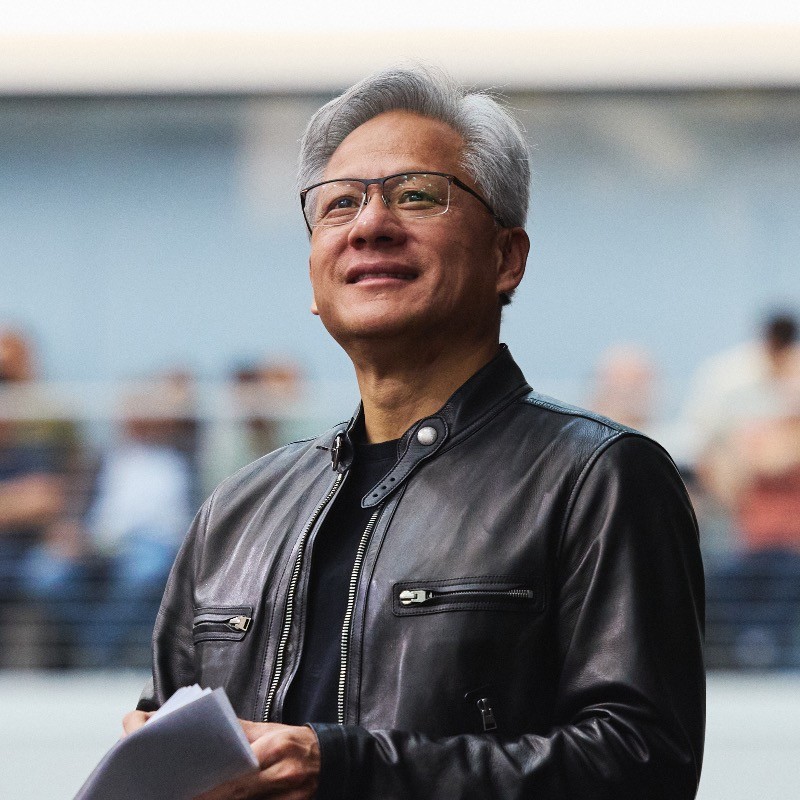 Nvidia CEO Jensen Huang
Announcements include:
- Underdog Desktop Agent now available for RTX Spark
- DGX Spark 64GB availability
- Nvidia Sync to support eight DGX Sparks and add Model Launcher this month
- October DGX Spark software update adds Wi-Fi Assistant and updates DGX Spark Skills
- DGX Station improves manageability with seven new integrations
- DGX Station for Windows launches in December with support for many manufacturing apps and agent harnesses
- Three new open-source reference workflows for robotics on DGX Station
- NVIDIA Cloud Functions is coming in early access to DGX Station
- Recursive Flint, a new local coding model, is now available for NVIDIA local hardware
- Day-0 support for new Nemotron, GLM, DeepSeek, Qwen, MiniMax and FLUX.3 AI models
- New accelerations for llama.cpp and vLLM inference engines and a new collection of checkpoints optimized for local AI hardware.