
Countdown to #CPExpo 2027:
- 00Days
- 00Hrs
- 00Mins
- 00Secs
(This is part of a regular series of technical advisor CEO Spotlights, where leading TAs share their secrets for success and goals for the future).
Seth Penland started Bluewave Technology Group in 2016 because he saw an opening for a national advisory firm that could simplify and improve tech buying. He has since grown that single technology advisor (TA) firm into a 140-person behemoth after more than two dozen acquisitions.
Bluewave acquired seven companies in 2025 alone, and was ranked No. 255 on the Inc. Magazine’s 2025 Inc. 5000. Bluewave’s inclusion on the list was based on percentage revenue growth over the past three years and its track record of driving innovation, creating jobs, and delivering exceptional value. It added CloudZen Partners in January, as its growth continues with all the acquisitions aligned under a common operating model.
Penland said two areas of growth focus are security and AI advisory, “where client demand is outpacing the market's ability to give clear, unbiased guidance.”
Despite its growth, Penland said Bluewave maintains “independence of thought” to avoid the influence of hype cycles and group think.
“That independence is central to who we are,” Penland said. “The moment you start steering every client toward the same handful of providers, you stop being a true advisor.”
We caught up with Penland to talk about how he built Bluewave, where the company is going and opportunities presented by AI, cybersecurity and customer experience.
What inspired you to start or lead your company, and what is your company’s mission?
Penland: I started Bluewave Technology Group because I saw how frustrating and inefficient technology buying had become for most organizations. Teams were spending months sorting through vendor noise, and running long RFP processes, only to end up unsure whether they were making the right decision.
When I looked at the market, I saw a clear gap. There was not a national advisory firm delivering this level of value to clients. I believed that by solving this need, we could expand the market in two important ways: more clients would work with an advisor, and more partners would use the channel as a key route to market.
We built Bluewave around an independent advisory model to do exactly that. Our mission is to bring clarity to technology decisions so organizations can stop second-guessing and start acting with confidence. In practice, that means helping clients cut through complexity, choose the right solutions, and stay aligned to outcomes across the full technology lifecycle. At our best, we give clients real decision confidence in a noisy market.
How big is your company now headcount-wise, and who are your main technology partners?
Penland: Today, Bluewave has more than 140 team members across 24 states. Our team brings together expertise across client advisory, solution advisory, and client success, working as an extension of our clients’ teams from the first conversation through implementation and ongoing optimization.
When it comes to partners, we are intentionally broad and vendor-neutral. We work across the full IT stack -- cloud, connectivity, security, collaboration, managed services and AI --wherever the client has a decision to make. Our job is not to push a shortlist of preferred providers. Our job is to understand the client’s goals, assess the market objectively, and help them choose the right fit. That independence is central to who we are. The moment you start steering every client toward the same handful of providers, you stop being a true advisor.
What do you see as the biggest opportunities and challenges in your industry over the next five years?
Penland: The biggest opportunity is that technology is now central to business strategy. AI, cybersecurity, data, and customer experience are no longer side conversations. They are board-level priorities. As those decisions move higher up inside client organizations, the expectations change as well. Clients will want to work with larger, more professional firms that bring the right expertise, real experience, and the operational discipline to manage complex initiatives well.
On the challenge side, I think the market, especially transactional SMB purchases, will continue moving to marketplaces. That will leave the more complex projects to be managed by strategic advisory firms with the technical expertise and robust processes to help clients get those decisions right.
How is your company using AI and other emerging technologies to stay ahead of the curve?
Penland: For us, AI starts with data. If the foundation is weak, the output will be too. That is why we invested in a strong data platform and a reliable source of truth so our teams can see client environments, provider performance, and outcomes more clearly.
That foundation helps us make better decisions, improve client interactions, and operate more efficiently. It also puts us in a stronger position to apply AI where it creates value. For example, surfacing provider performance patterns across our 10,000-plus client base that no individual advisor could see on their own.
Today, we are using AI automation and data-driven insight across research, solution evaluation, lifecycle management, and more. But the principle is simple: AI should sharpen human judgment, not replace it. Our advisors remain accountable for every recommendation. Technology should help us move faster, see patterns earlier, and serve clients better.
What advice would you give to aspiring entrepreneurs or leaders in the tech space?
Penland: Start with the customer outcome. If you are not solving a real problem or improving a measurable result, it is hard to build anything durable.
Second, protect your independence of thought. Tech is full of hype cycles and pressure to follow the crowd. Credibility comes from being clear-eyed, telling the truth, and staying focused on what is actually best for the customer.
Third, invest in people, repeatable process, and data infrastructure earlier than feels necessary. In an advisory business, this is the product.
And finally, play the long game. Trust is built over time and has to be earned. It is built by showing up consistently, especially when things get difficult. That is where real partnerships are earned.
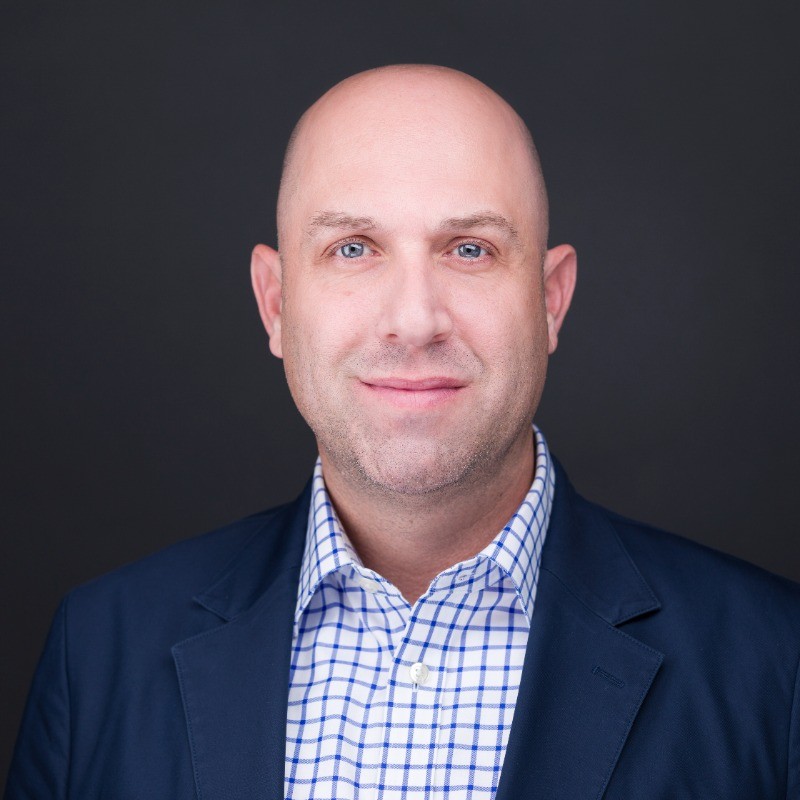 Seth Penland
What’s next for your company? Are there any exciting projects or initiatives you’d like to share with our audience?
Penland: We are in an active growth phase, and the focus is on doing it in a way that makes the client experience better, not just bigger.
On the operational side, we are building out a stronger data platform so our advisors can easily connect dots for clients and bring new insights. That infrastructure is what makes our advisory model more precise and more accountable as we scale.
We are also expanding our team and deepening our practice areas in security and AI advisory, where client demand is outpacing the market's ability to give clear, unbiased guidance. Most organizations are not short on AI vendors knocking on their door. They are short on advisors who can help them build a real business case.
The goal is the same as it has always been: make it easier for clients to get to the right answer and act on it. We’re just looking to do this at scale and with even greater precision.
What do most people misunderstand about building a sustainable business in the advisor channel?
Penland: A lot of people assume this is mainly a relationship business. Relationships matter, but they are not enough. A durable advisor business also requires strong operations, defined frameworks and blueprints, scalable GTM motion, good data, and consistent follow-through.
The other thing people underestimate is what real independence takes. It is easy to say you are client-first. It is harder to build a company that consistently rewards long-term outcomes over short-term wins. A sustainable business in this channel looks a lot more like an operating company than people think. It takes discipline, not just good sales instincts.
Where do TAs risk losing credibility with buyers today?
Penland: We lose credibility when we sound like resellers instead of technology advisors. If the conversation starts with a product logo instead of a business problem, sophisticated buyers tune out quickly.
We also lose trust when we disappear after the contract is signed. Clients remember who stayed engaged when delivery got difficult and who moved on once the paperwork was done.
And we risk credibility when we oversell ideas like AI or “transformation” without a clear business framework, and a realistic path to execution.
If you were starting today, what would you do differently and what would you do exactly the same?
Penland: If I were starting today, I would invest in data infrastructure and operating frameworks earlier than felt urgent at the time. Having stronger systems, clearer assessment frameworks, and better visibility from day one makes scaling easier.
What I would do exactly the same is invest in team expertise and client outcomes. We built Bluewave to act as an extension of the client’s team and to help them make technology decisions with confidence. That has not changed.